SPHEREx presentation at 240th AAS in Pasadena, CA
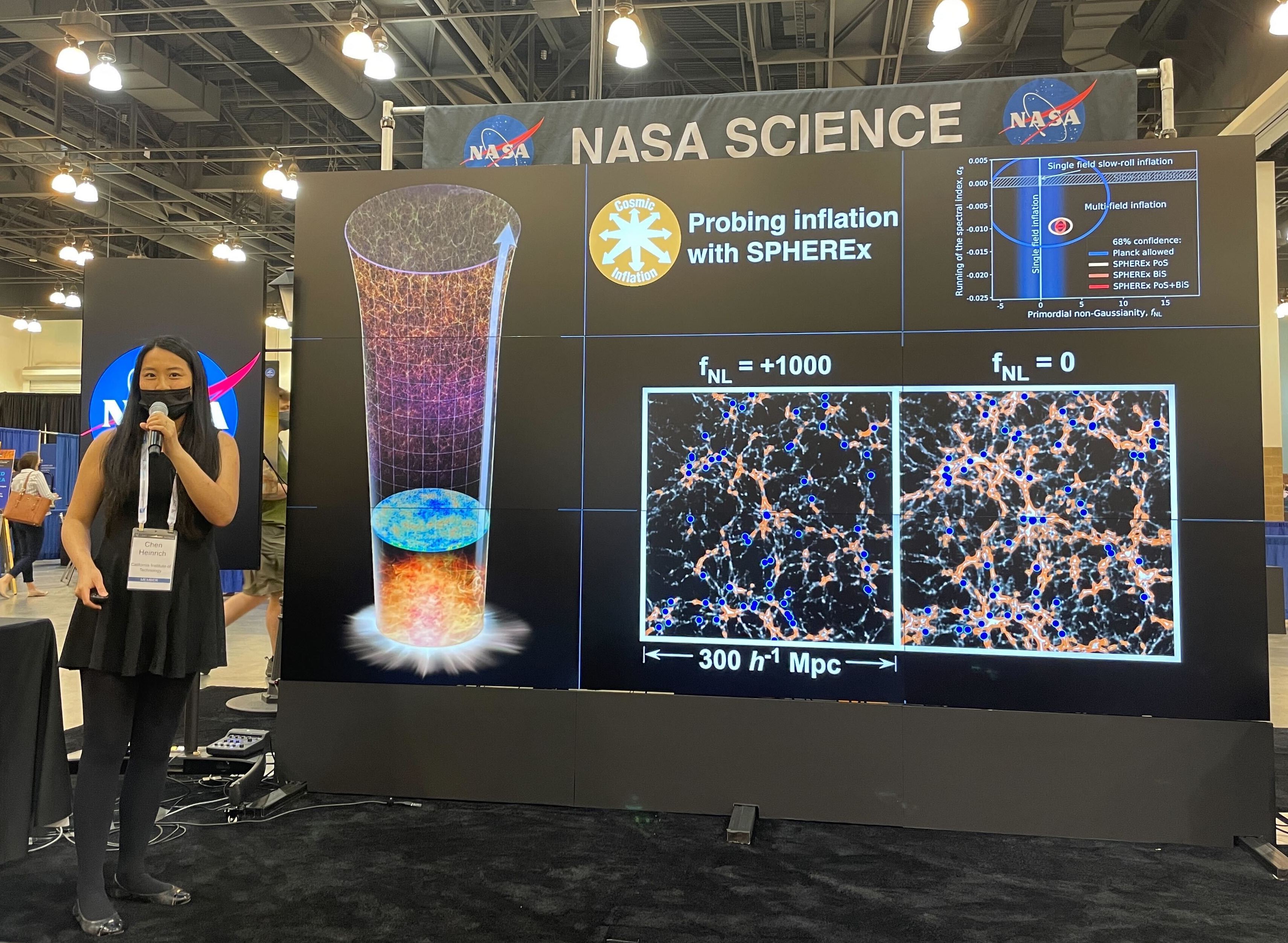
Dr. Chen Heinrich presenting a Hyperwall talk at the 240th American Astronomical Society Meeting in Pasadena, CA on June 15th 2022.
Dr. Chen Heinrich presented a hyperwall talk at the 240th American Astronomical Society Meeting in Pasadena, CA on June 15th, 2022. Taking place at the large NASA booth, Dr. Heinrich’s talk focused on SPHEREx’s three primary science themes of cosmic inflation, the evolution of galaxies and structure in the universe, and the trail of water ice in the Milky Way’s interstellar medium, as well as on the technical implementation of the project. The talk was well received, and helped the wider astronomical community understand SPHEREx’s scientific goals, implementation, and the wide range of data products that will be released throughout the lifetime of the mission.
Recent News
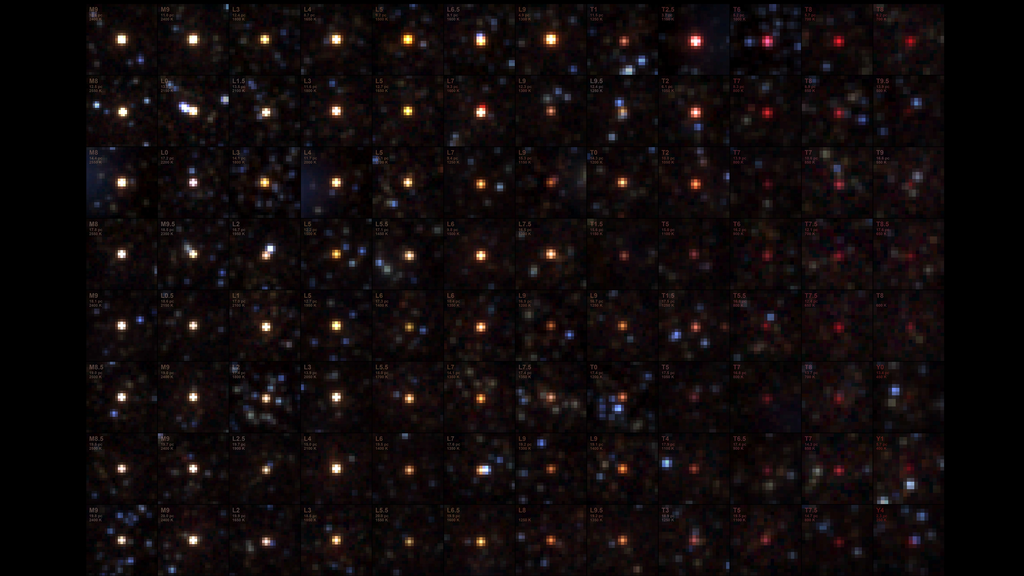
NASA’s SPHEREx Telescope Sees Menagerie of Brown Dwarfs
NASA’s SPHEREx (Spectro-Photometer for the History of the Universe, Epoch of Reionization, and Ices Explorer) space telescope is shedding light on brown dwarfs, celestial objects that blur the line between stars and exoplanets. New findings published in The Astrophysical Journal show that these dark and cloudy worlds have chemically rich atmospheres not unlike the giant planets in our own solar...
Read More
SPHEREx Honored with RNASA Stellar Award
The Rotary National Award for Space Achievement awarded their 2026 Stellar Award to JPL's SPHEREx team for their outstanding contributions to space science and technology.
Read More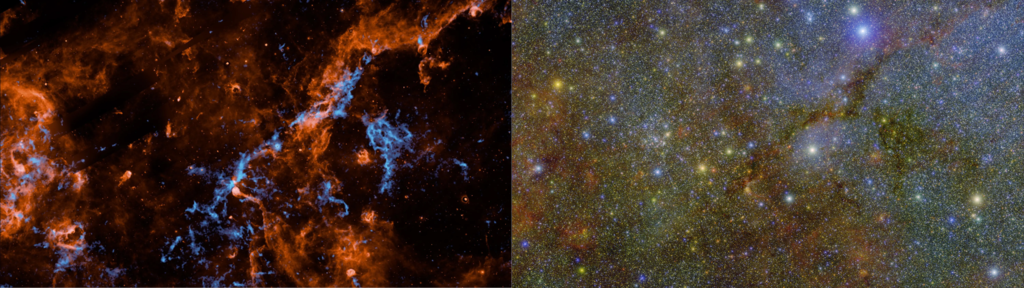
NASA’s SPHEREx (Spectro-Photometer for the History of the Universe, Epoch of Reionization, and Ices Explorer) mission has mapped interstellar ice at an unprecedented scale. Covering regions in our Milky Way galaxy more than 600 light-years across, the ice was found inside giant molecular clouds — vast regions of gas and dust where dense clumps of matter collapse under gravity, giving birth to...
Read More
NASA’s SPHEREx Mission Tracks Brightening of Interstellar Comet
NASA’s SPHEREx mission turned its infrared gaze on interstellar comet 3I/ATLAS in December 2025, adding to the deep pool of information the agency has gathered on what is only the third such object to be discovered passing through our solar system.
Read More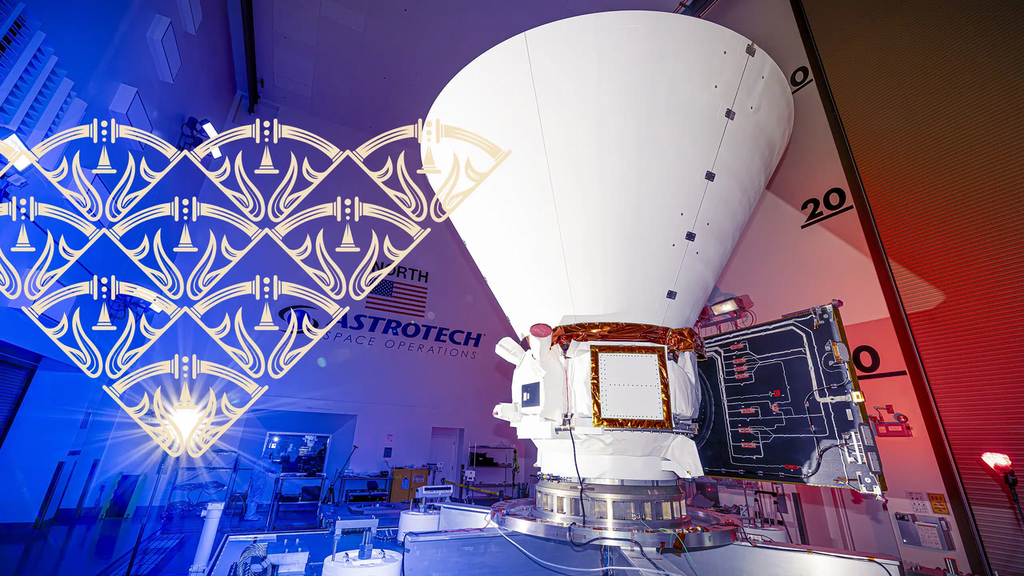
SPHEREx Mission Team Wins ECAD Award
The SPHEREx Mission Team wins the Sylvia A. Earle Award for Exploration Excellence.
Read More